The Tiffins
See the 20 recipes in The Tiffins →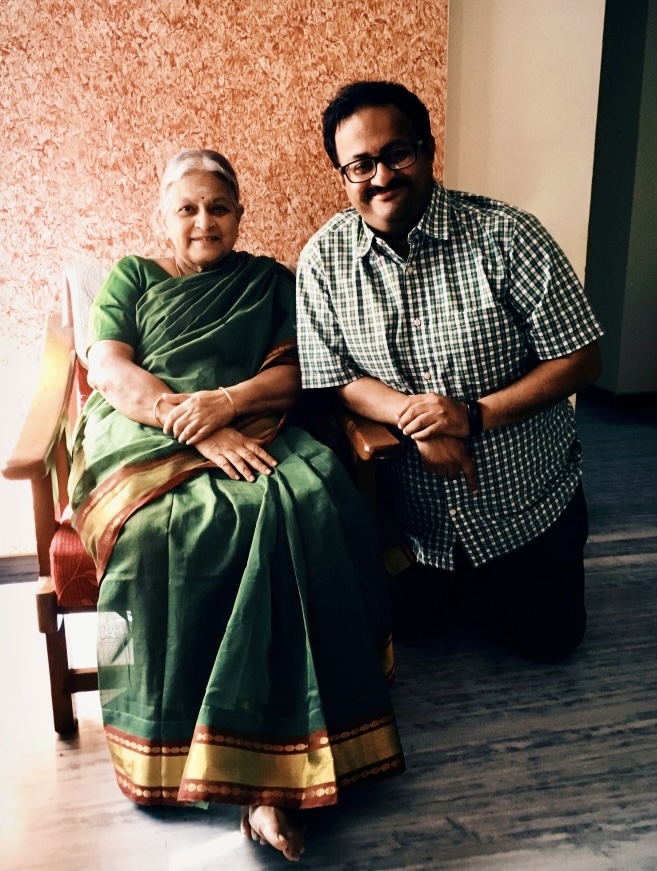
When I cook, the neighbours ten houses down know about it.
When Amma cooked, the kitchen stayed quiet.
She cleaned as she went, wiped the counters, put things away the moment she no longer needed them, and somehow managed to produce elaborate breakfasts and lunches without leaving any evidence of the work involved. Often, the first we knew of what she'd made was when we sat down at the table.
Amma believed that a good cook needed three things.
The first was the ability to cook exactly the right amount.
Enough for everyone to eat comfortably, without anybody having to eye the serving bowl and calculate whether they could have seconds. But not so much that there were leftovers to be dealt with the next day.
People called her Annapurni. Anyone who came home was fed, whether they had come expecting a meal or not. Amma could always rustle something up. And yet, somehow, she knew exactly how much to make.
I watched her do this for years. I've picked up all sorts of tricks that aren't in any recipe book, but her maths continues to elude me. I either make enough for a small wedding or discover, just as everyone is settling down to eat, that I've made a smidgen too little.
The second rule was to cook without fuss.
No unnecessary noise, no counters covered in dirty vessels, no dramatic announcements about how much work was involved. Everything had its place, and everything went back to its place.
I have not inherited this particular skill.
The third rule was to trust your cooking.
Amma never tasted her food while she cooked. Not once. She knew what she'd put in, how much she'd used, and what the finished dish would taste like.
My sister-in-law Vinothini comes close. She doesn't taste while cooking either, although she does run a small focus group. My brother, her daughters, or I will be summoned to try a spoonful and offer an opinion before something is served.
I, on the other hand, am a compulsive taster.
I taste at every stage. I adjust, taste again, add something, reconsider, and taste once more. If it were physically possible to put hot tadka oil directly into my mouth, I probably would.
Amma would not have approved.
The Home Operating System
Every house has its own morning logic. Ours was built around the pressure cooker, the stove, and a breakfast rotation so consistent that even now, years later, I can remember exactly what we ate on which day.
Sunday was batter day.
Amma would soak and grind enough rice and dal to see us through most of the week. Monday and Tuesday were idli days. Wednesday was dosa. By Thursday, depending on how much batter was left, it became uthappam. Or it didn't.
Which is how Thursday came to have its own special significance in our household. Thursday was usually when it entered our lives.
Upma.
I have written elsewhere about my complicated relationship with upma, so I won't revisit the entire history of our disagreements here. Suffice it to say that Amma believed it was a perfectly respectable breakfast, and I believed otherwise.
Neither of us was particularly open to persuasion.
Saturday was more flexible. It could be adai, pesarattu, poha, sabudhana khichdi, dokla, or something else entirely. Amma had an extensive repertoire, and there was always something she could make from what was available.
And Sunday had its own breakfast ritual.
It was the one we looked forward to all week. But I'll come back to that later.
What strikes me now is how little discussion any of this required. Amma didn't consult us every morning about what we wanted to eat. She didn't need to. There was a rhythm to the week, and we all knew it.
Of course, knowing what was coming didn't necessarily mean being pleased about it.
But there was something reassuring about that predictability. Breakfast appeared every morning, generally on time, and somehow accommodated everyone's preferences, dislikes, and occasional unreasonable demands.
Amma ran the whole thing in her head.
Amma's Peculiar Maths
The more I cook, the more I realise how much of Amma's knowledge was never written down.
If you asked her how much turmeric to use, she'd say, "Some."
If you asked how much "some" was, she'd look at you as though you'd asked her to calculate the amount of air required to breathe.
A large teaspoon meant a heaped one. A lime-sized ball of tamarind was exactly that. Salt to taste meant her taste.
And then there were the instructions that depended on your senses rather than any conventional measurement.
"How do you know when it's done?"
"Listen to it."
Ghee, for example, changes its sound as it heats. It starts with a pzzz and eventually becomes a ciiii. Pakodas and thattai make a tremendous bubbling noise when they first go into hot oil. As they cook, the bubbling subsides to a gentle hum. That's when you know they're crisp.
And whatever colour you're aiming for, you take them out one shade lighter, because they'll continue to darken.
You need a shade card in your head.
You also need to smell what you're cooking. Food tells you when it's ready because it begins to smell different.
These are things that are almost impossible to capture in a conventional recipe. You can specify quantities, temperatures, and cooking times, but how do you explain the precise moment when a sound changes, or when something smells done?
Amma knew.
I am still learning.
Perhaps that's what I remember most about those mornings. Not just the food, but the extraordinary ease with which Amma seemed to produce it. The way she could tell whether a dosa was ready without hovering over the tawa. The way she adjusted a chutney without tasting it. The way she knew, almost to the spoonful, how much everyone would eat.
To us, it was simply breakfast.
To Amma, it was a hundred small decisions, made so routinely and so well that we barely noticed them.
And perhaps that's the peculiar thing about growing up in a house where someone cooks for you every day. You remember the idlis, the dosas, the chutneys, and, unfortunately, the upma.
You don't always remember the work.
This chapter is about the food that organised our mornings, but also about the woman who made it all seem so effortless.
And about how much effort it takes me to do even half of what she did.
The Dosa–Idli Universe
There is no universe more orderly than the one built from dosa batter and idli moulds. Fermentation dictated mood, timing dictated texture, and the first ladle of dosa batter on the tawa dictated everyone's fate for the day. These dishes weren't just breakfast—they were a calendar, a compass, a soft-steamed guarantee that life could be managed, one ladle at a time.
Adai and Rotis
This was Amma's version of high-efficiency cooking: no soaking for too long, no elaborate chutneys required, no audience approval needed. Adai and rice-flour rotis were the weekday warriors—dense, filling, protein-rich, and always slightly unpredictable in texture. But they made the house smell warm and nutty, and that was sometimes enough.
Morning Experiments
Dokla, khandvi, sabudhana khichdi—things she made on days when she was feeling whimsical or simply bored of her own discipline. These dishes felt like field trips: brief departures from our usual Tamil comfort zone. They were lighter, softer, often less spicy—morning diplomacy on a plate.
Upma and Other Traumas
Upma deserves its own subsection because upma is not a recipe, it is a personality test. Some people love it. Some fear it. Some associate it with childhood sabotage. In our home, it appeared every Thursday like a cosmic inevitability—never cancelled, always functional. You could fight it, but you would lose. And yet, when made by Amma, even upma held a small, stubborn grace.